
By Dr Matthew Barber
A lot has changed from the traditional model of medicine, where doctors treat disease as it arises. We’re increasingly focused on holistic care and prevention these days — and that is a great thing. But with the advent of the internet, social media, and now AI, there are huge amounts of information (and misinformation) at our fingertips, constantly infiltrating our feeds. We live in a success culture, and it’s increasingly the role of your primary care doctor to give advice on all sorts of new possibilities, risks, and opportunities when it comes to our health.
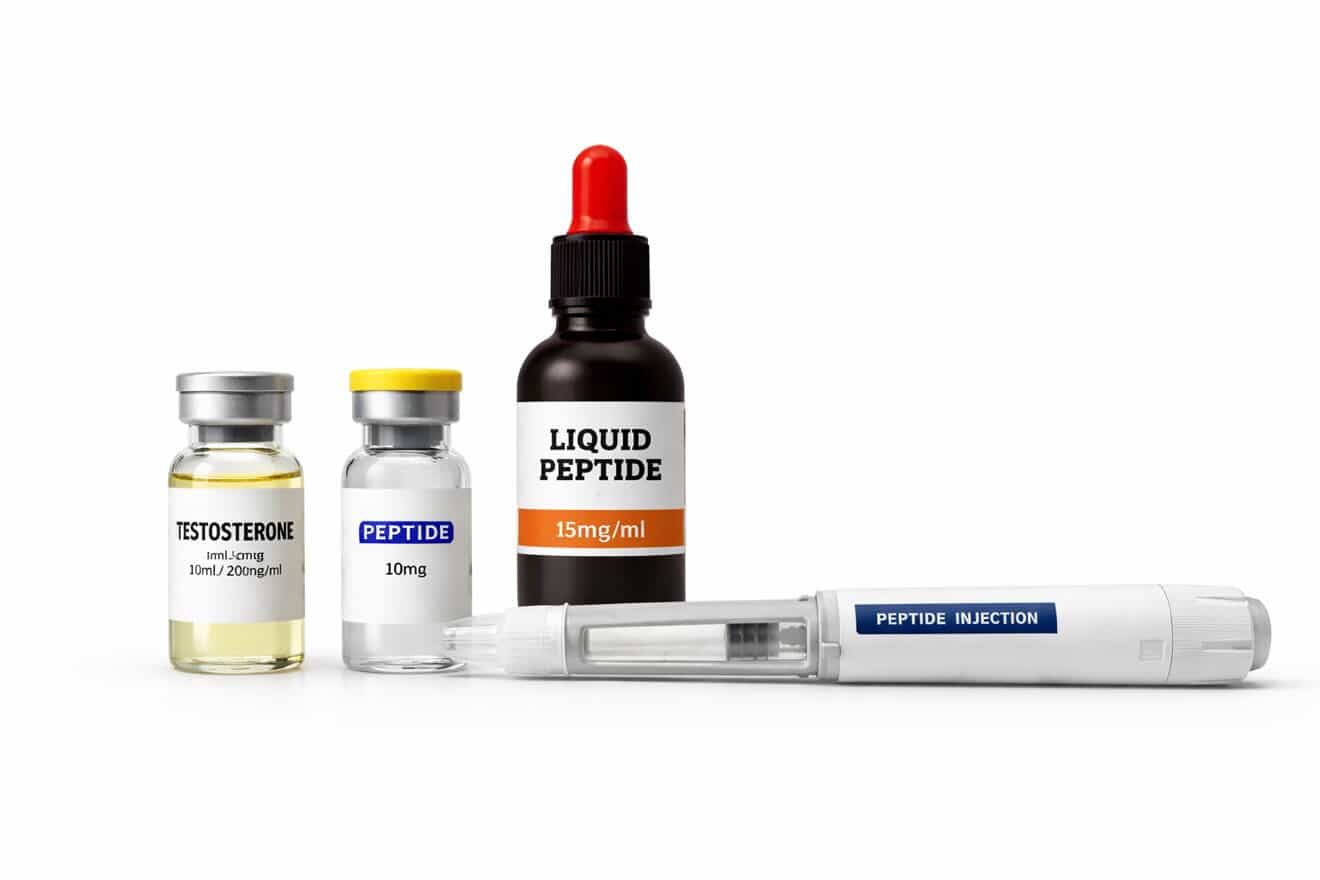
A very topical example of this is peptides. Give your algorithm even a hint that you might be interested in them and influencers selling these products will start filling your feed very quickly. At the time of writing, there are close to 100 different peptides being sold online, with reported benefits ranging from weight loss and anti-ageing to muscle growth, sleep, tanning, and tissue recovery.
The striking thing is that many of them have very real physiological effects — and therefore very real side effects. Some peptides have become massive success stories for pharmaceutical companies and are turning huge profits. Those weight loss injections you may have heard of — Ozempic, Wegovy, and Mounjaro — are all peptide-based medications. Retatrutide is another peptide currently in phase 3 clinical trials. It looks promising not just for weight loss (via appetite suppression) but also for improving insulin sensitivity and pancreatic function. Phase 3 trials are the final step before potential approval as a prescription medication — yet retatrutide is already seeing use among some gym-goers and bodybuilders.
So how come it’s so easy to get these products online?
Peptides are simply chains of amino acids — the building blocks of proteins in the body. They can be synthesised relatively easily using automated laboratory processes that have existed since the 1980s. In theory, that might suggest that when you buy peptides online, you’re getting what you pay for.
In reality, when these products are analysed, the contents often vary widely. Some contain incorrect dosages, some contain no active ingredient at all, and others have been found to contain heavy metals or unexpectedly high levels of vitamin B6.
So should you take them?
My answer is: probably not. And if you’re considering it, you should discuss it with a doctor who has some knowledge of the topic.
These substances can have meaningful biological effects. The problem is that we don’t truly understand many of them. Most peptides available online are nowhere near the stage of clinical development that retatrutide has reached. The vast majority have no human data at all — not even phase 1 trials, which are designed to establish basic human safety. Some have limited animal studies or laboratory (in vitro) data. Others are based purely on theoretical knowledge of biological pathways that might produce benefits in humans.
That leads to another important theoretical concern: cancer. Many peptides interfere with pathways involved in cell growth and replication — the very processes that, when dysregulated, lead to cancer. It is biologically plausible that altering these systems could increase cancer risk. That said, this concern itself isn’t evidence-based either — because we simply don’t have long-term human data. The absence of evidence cuts both ways.
History gives us reasons to be cautious. There are countless examples of products with genuine biological effects that were once thought beneficial but later proved harmful. Diethylstilbestrol (DES), a synthetic oestrogen, was prescribed to prevent miscarriage. It later turned out to significantly increase the risk of breast and other cancers. Phenacetin (marketed as Bex powders) was widely used for pain relief. It was metabolised to paracetamol and seemed safe for decades before it was linked to kidney failure and bladder cancer.
What about the confident claims online that these peptides are safe and effective?
The problem is that many of these claims are made by influencers who are also selling the products. The best available data for many peptides is limited to animal models at best. That means we simply do not know — in a rigorous, scientific sense — whether they are safe or effective in humans. Some clearly produce effects that people may find desirable, such as SARMs for muscle building or melanotan for tanning. But we are largely relying on anecdote when it comes to short- and long-term safety.
So what’s the take-home message?
Just because something has a real biological effect doesn’t mean it’s safe. And just because something is sold online doesn’t mean it’s regulated, tested, or understood. Many of the peptides being marketed today may eventually become valuable prescription medications. The key difference is that approved drugs go through years of careful testing to determine the correct dose, the true benefits, the side effects, and the long-term risks.
When you buy peptides online, you’re stepping outside that safety system and effectively experimenting on yourself without those safeguards.
If you’re curious about peptides or interested in optimising your health, that curiosity isn’t a bad thing. But it’s worth approaching the topic with caution, healthy scepticism, and guidance from a qualified doctor who can help you separate genuine medical advances from marketing hype.

 Stonewall Medical Centre.